What the Boundary Shrub Knows: A Late-Autumn Practice in Ordinary Green
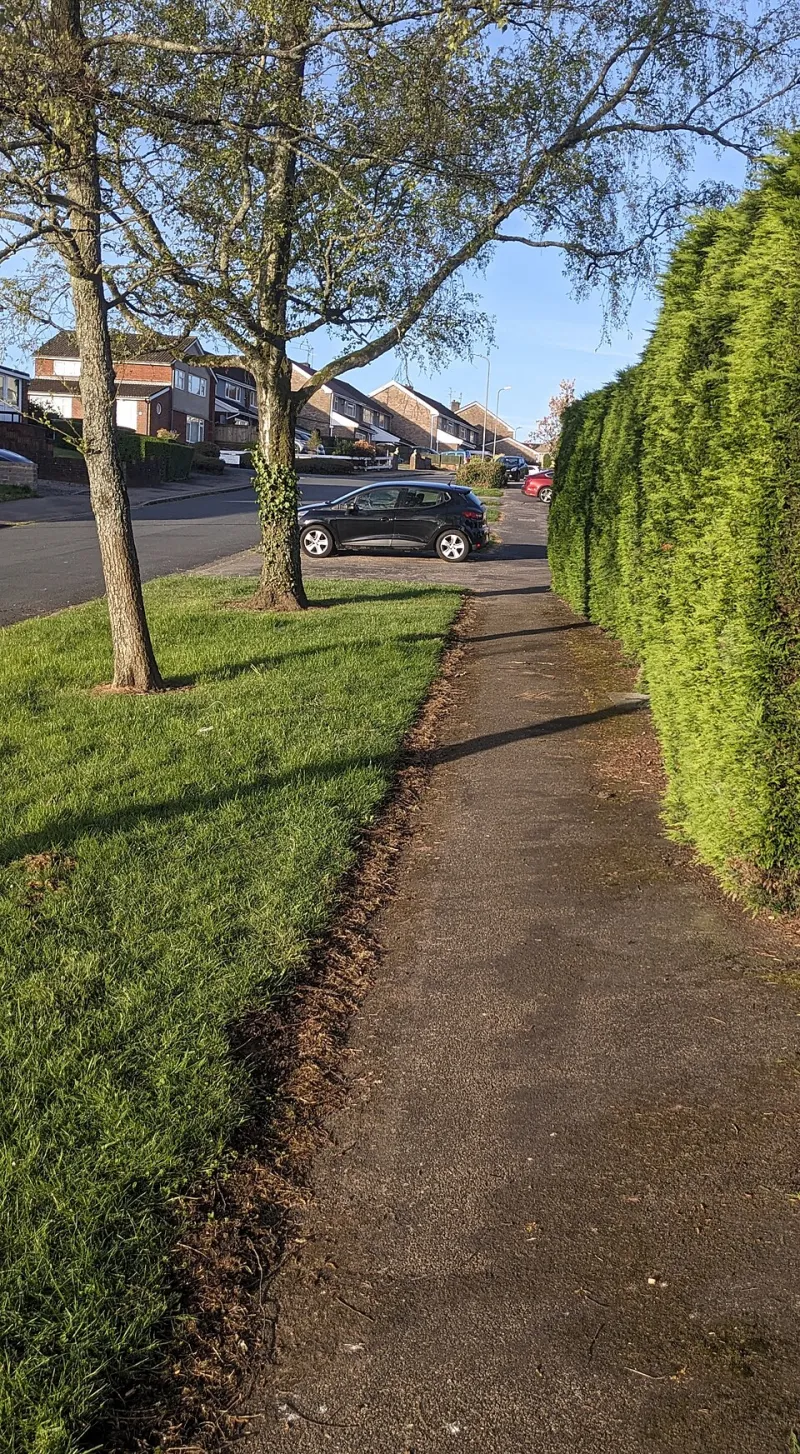
Photo: Jaggery , CC BY-SA 2.0, via Wikimedia Commons
On a damp November afternoon, the light has usually given up by half past four. The school run is done, the bus is late, and the pavement is slick with leaves. Somewhere between the wheelie bins and the corner shop, there is a shrub. It might be hawthorn, or pyracantha, or something nobody has ever thought to name. It is not beautiful in the way a garden is beautiful. It is scruffy, a bit one-sided, and doing its own thing. It is also alive, and it is right there.
Most of us have been taught that nature is elsewhere. A garden, a weekend walk, a national park, a trip to the coast. All of those are good. But they are not the whole story. The living world also arrives in smaller, more awkward places: a boundary hedge, a strip of grass by the car park, a shrub that has quietly claimed a patch of council estate. These places do not ask for a day off. They ask only that we stop for a moment.
Nature does not need a postcode
There is a quiet assumption that connection with the natural world requires a destination. You pack a bag, you drive somewhere, you take a photograph. But a pavement hedge is a real habitat. It holds insects, shelters sparrows, catches rain, and produces berries for blackbirds. It is not a lesser version of the countryside. It is simply a different expression of it, shaped by streets and seasons and the odd bit of neglect.
For anyone without a garden, that matters. It means the practice of noticing is not reserved for people with raised beds and a potting shed. It is available on the way to the pharmacy, outside the leisure centre, along the edge of a housing estate. You do not need equipment. You do not need an entrance fee. You need ten minutes and a willingness to look.
The scruffy places are often the ones we pass most often. That is their quiet advantage. They become part of the background, and then one day we see them properly. A hedge that has been there for years can suddenly seem like a small green room. A shrub that looked like nothing in July can be full of berries in late November. The change is not in the plant. It is in our attention.
Why the overlooked green matters
There is a long tradition of treating attention as a spiritual practice. Not a dramatic one. Not a performance. Just the decision to be present with something that is not asking anything of you. A boundary shrub is good for this because it makes no demands. It is not a view. It is not an attraction. It is a living thing getting on with its life.
When you give it ten minutes, you may notice that your breathing changes. Not because you have done anything clever, but because you have stopped rushing. The mind may still be busy. That is fine. The practice is not about emptying your head. It is about letting something ordinary have your attention for a while.
Late November is a good time for this. The light is low, the air is cold, and the year feels tired. A hedge in November is not trying to impress anyone. It is stripped back. The berries stand out. The shapes are clearer. If there are streetlights nearby, they catch the leaves in a way that feels almost accidental. This is not the lush green of summer. It is quieter than that, and it has its own kind of honesty.
The ten-minute practice
Choose a green edge you pass regularly. It can be a pavement hedge, a shrub by the bus stop, a berry-heavy boundary line, or a patch of ivy on a wall. It does not need to be special. In fact, it is better if it is not.
Stand or sit nearby, somewhere safe and out of the way. Put your phone away. Let your shoulders drop. You are not here to identify anything or take a photograph. You are here to notice.
Start with three things. The texture of the leaves. The movement of a branch in the wind. The sound of traffic behind you, or a bird somewhere inside the hedge. Then choose one detail and stay with it for a minute. A single berry. A spider's web. The way the light sits on a wet leaf. You do not need to analyse it. Just look.
If it helps, breathe a little more slowly. Not in a forced way. Just enough to match the pace of the thing in front of you. A shrub is not in a hurry. It is not checking its watch. It is simply being a shrub, which is a job it does very well.
Before you leave, name one thing you noticed. You can say it in your head. You can say it out loud if nobody is around. You can offer a quiet word of thanks if that feels natural. Then walk on.
What you might find
You probably will not have a profound revelation. That is not really the point. The point is the pause. The small shift in pace. The way a ten-minute stop can make the rest of the afternoon feel slightly less compressed. You might notice that you are calmer. You might notice that you are colder than you thought. You might notice nothing at all, and that is allowed too.
The scruffy hedge is not performing for you. It is not there to make you feel spiritual. It is there because it grew, and because nobody cut it back, and because the soil and the rain and the light allowed it. That is enough. If holiness means anything in ordinary life, it might mean this: a place that asks nothing of you except that you stop for a moment.
So the next time you are waiting for a bus, or walking back from the shop with a bag of potatoes, look for the green edge. It is probably closer than you think. Give it ten minutes. Let it be scruffy. Let it be ordinary. Let it be exactly what it is.