Holding Two Weathers: A Winter Practice for Mixed Feelings
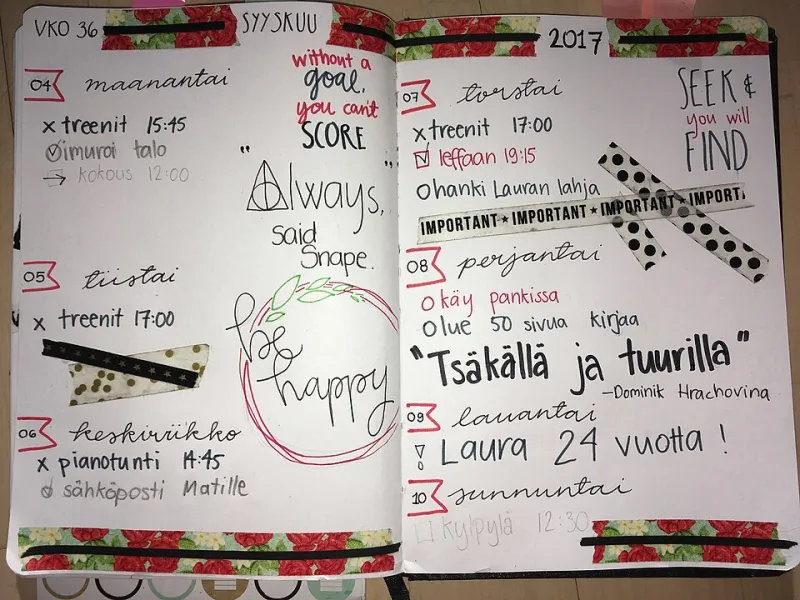
Photo: Nea.salo, CC BY-SA 4.0, via Wikimedia Commons
Winter is rarely one weather inside us. You can be glad about the fairy lights and worried about the heating bill. You can love the idea of a cosy night in and feel a small pang at how dark it gets by four. You can be proud of getting through the day and exhausted by the effort of it. None of that is a contradiction. It is just human weather.
And yet, this time of year can make us feel that we should pick a lane. Be festive. Be grateful. Be calm. Be productive. Be over it. The pressure to feel one clean thing can be surprisingly heavy, especially when the season is already asking a lot of our time, money and energy.
When good vibes only make things heavier
Toxic positivity is not the same as being hopeful. Hopefulness leaves room for the hard stuff. Toxic positivity insists the hard stuff should be hidden, reframed or rushed past. It says things like: everything happens for a reason, just stay positive, at least you are not worse off, others have it harder. Some of those phrases may come from kindness, but they can land like a door closing.
If you are carrying grief, worry, loneliness or plain old tiredness, being told to look on the bright side can make you feel faulty. It can also make you quieter, which is the opposite of what most of us need when we are struggling.
A gentler approach is to practise holding two true things at once. Not to make the difficult one disappear. Not to pretend the good one cancels it out. Just to let both be real for a moment, without asking them to agree.
Two true things
Find a notebook, a scrap of paper or the notes app on your phone. Draw a line down the middle if you are using paper. At the top of one column, write: true and hopeful. At the top of the other, write: true and hard. The words do not have to be perfect. You can use your own headings.
Then write one honest sentence in each column. Keep them small. For example: I am looking forward to seeing my sister. I am dreading the cost of the train. Or: I am glad the work year is ending. I am worried about what comes next. Or: I felt warm in the cafe today. I felt lonely walking home.
The aim is not balance. You are not trying to produce equal columns. You are simply letting your inner world be more than one thing. Sometimes one column will be much longer. Sometimes the hopeful sentence will feel hard to find. That is allowed. You can write: I cannot find a hopeful thing today, and that is true too.
A breathing practice that leaves room
After you have written your two sentences, sit for a minute. Put one hand on your chest and one on your belly, or simply let your hands rest in your lap if that feels more comfortable. Breathe in through your nose for a count of four, if that is comfortable, and out for a count of six. Do not force it. The longer out-breath is not a magic trick. It is just a gentle signal that you are here, in your body, and not required to solve everything in this breath.
As you breathe, try saying quietly in your head: both are here. Not: both are fine. Not: I should be over this. Just: both are here. Joy and exhaustion. Hope and grief. Rest and ambition. The phrase is not a mantra to make feelings behave. It is a small act of hospitality.
What to do when one feeling shouts louder
Some days the hard column will shout. That does not mean the practice has failed. It may mean you need support, rest, practical help or simply a kinder evening than the one you had planned. Mixed feelings are not a problem to be fixed by journaling alone. If sadness or anxiety is persistent, if you are not sleeping or eating well, or if things feel unmanageable, speak to your GP or a trusted person. A breathing practice is a companion, not a replacement for care.
On other days, the hopeful column may feel almost embarrassing, as if you are not allowed to enjoy something while other people are struggling. You are allowed. Joy is not a betrayal of grief. It is part of the same full human picture.
A gentle winter ritual, not a cure
This practice works best when it is small and repeatable. You might do it once a week, or on the evenings when the day has been particularly mixed. Light a lamp. Make a cup of tea. Write two sentences. Breathe for a minute. Close the notebook.
There is no need to resolve the season. Winter is not a problem to be solved, and neither are you. Sometimes the most grounded thing we can do is stop demanding a single forecast and admit that we are carrying several weathers at once. That honesty is not gloomy. It is spacious. And in that space, there is often a little more room to breathe.