The Plot Thickens: Finding Quiet Company in a UK Allotment
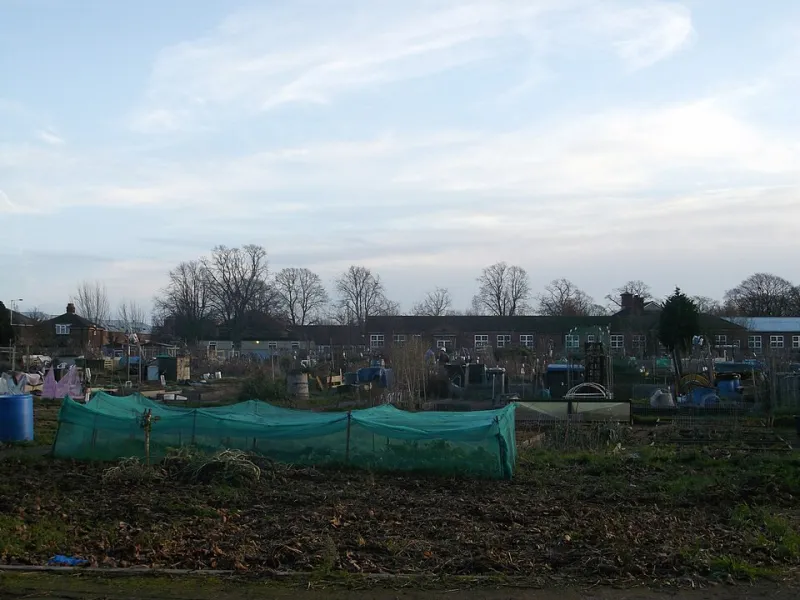
Photo: David Anstiss , CC BY-SA 2.0, via Wikimedia Commons
Most allotment sites are easy to miss. There is a gap between houses, a padlocked gate, a noticeboard with a laminated rules sheet and a phone number for the site secretary. Behind it, there might be twenty plots or a hundred: sheds, water butts, fruit cages, bean wigwams, a bench made from pallets. It is one of the quietest forms of community life in the UK, and one of the most ordinary routes back into a slower rhythm.
Swapping scrolling for soil is not a dramatic cure for modern stress. It is something more modest and more useful. It is a place to put your hands. It is a reason to go outside in February. It is a way of measuring a day by what has grown rather than what has been answered.
What the land asks of you
An allotment is a relationship with weather. It does not care about your inbox. It asks you to notice the forecast, the length of the day, the state of the soil. In spring, there is sowing and pricking out. In summer, watering and tying in. In autumn, harvesting and clearing. In winter, there is digging, planning, and the strange pleasure of a mug of tea in a cold shed.
That seasonal rhythm is part of the therapy. You cannot rush a parsnip. You cannot argue with a slug. You learn to do the next small task rather than the whole imagined project. Weed a bed. Water the tomatoes. Pick the courgettes before they turn into marrows. The work is repetitive in a way that lets your mind soften. When you are weeding, you are not multitasking. You are just weeding.
The mental health bit, without the clinical voice
There is plenty of evidence that gardening and green space can support wellbeing, but you do not need a study to understand the basics. An allotment offers gentle movement, daylight, fresh air, and visible progress. It gives your attention somewhere specific to land. It is hard to ruminate about tomorrow's meeting when you are trying to work out whether that seedling is a weed or the thing you planted last month.
There is also the sensory side: the smell of wet soil, the scratch of twine, the weight of a full watering can, the sticky green smell of tomato leaves. And yes, soil under your fingernails. It sounds like a small thing. It is a small thing. But small things are often what bring us back into our bodies.
This is not therapy in the clinical sense, and it is not a replacement for proper support if you are struggling. It is simply a setting where a lot of people find their nervous system has a little more room.
The community that grows alongside the veg
Allotment community is informal and slightly eccentric. Someone will tell you your beans need support. Someone will lend you a fork. Someone will leave a bag of surplus courgettes on your bench with a note that says help yourself. There is tea in sheds, advice over fences, and a particular kind of friendship that begins with a shared hosepipe.
It is not idyllic all the time. There are disagreements about water, weeds, bonfires, and paths. There are waiting lists. There are rules about sheds and hedges and what you can sell. But beneath the small politics is a simple fact: people are outside, together, doing something that is not scrolling. In a culture that often treats solitude and stimulation as the default, that is quietly radical.
Starting points for a beginner
You do not need a fantasy shed or a heritage seed obsession to begin. Start with the plot you can actually reach. Check your council website for allotment sites and waiting lists. Ask about half plots, which are often more manageable than a full plot. Visit open days and allotment association events. If the wait is long, volunteer at a community garden, join a local growing group, or start with containers and a windowsill.
When you do get a plot, start small. Clear one bed rather than the whole site. Learn the weeds. Check the rules about water, bonfires, and structures. Buy secondhand tools. Accept that the first year is mostly learning what your soil and your schedule can handle. The plot will teach you patience whether you ask for it or not.
The spiritual dimension of working with land
You do not have to call it spiritual. Many allotment holders would not. But there is something in the act of tending land that speaks to older parts of us. It is a form of attention. It is reciprocity: you feed the soil, and the soil feeds you. It is seasonal faith: you plant something and trust that the conditions will mostly do their part.
For some people, that is where the spiritual dimension lives. Not in a grand idea, but in the feel of a seed in your palm, the sound of rain on a shed roof, the first broad bean of the year. You are participating in a living system rather than managing it. You are not the main character. The weather is. The soil is. The blackbird is.
At 3 Spirit UK, we like practices that are grounded in ordinary life. An allotment is one of the most grounded there is. It will not fix everything. But it offers a place to put your hands, a rhythm to borrow, and quiet company while the vegetables grow.