The Pause We Share: A Gentle Way Through the Eleven O’Clock Silence
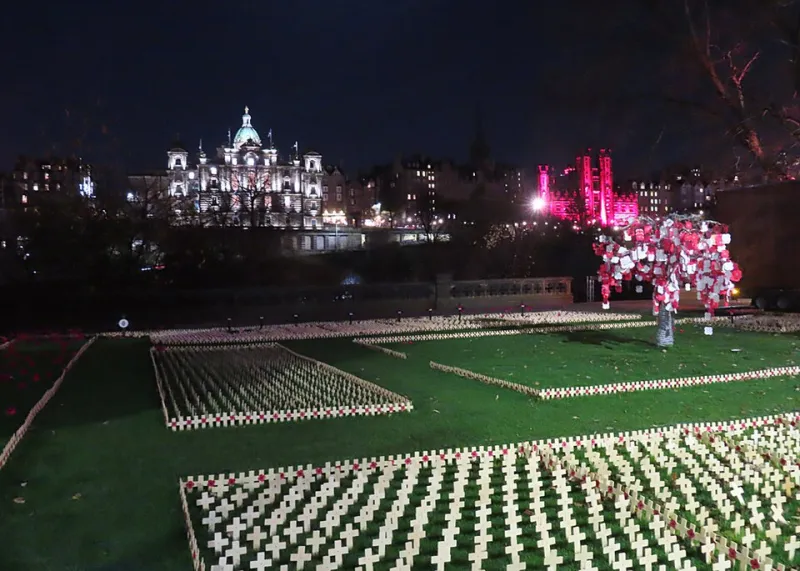
Photo: Anne Burgess , CC BY-SA 2.0, via Wikimedia Commons
On 11 November, at 11am, the UK does something quietly unusual. Trains are not meant to stop, but people do. Radios fall silent. In offices, kitchens, school halls and high streets, a small pocket of quiet opens up. Some people stand beside a war memorial in a coat and scarf. Others simply pause at a desk, a bus stop or the sink. The two-minute silence is not a test of patriotism, and it is not a competition in sorrow. It is closer to a shared human pause — a moment when a whole country, however briefly, makes room for loss, gratitude and the messy business of being alive.
That can be a lot to ask of two minutes. If you have ever felt awkward during the silence, you are not alone. If you have felt grief rise unexpectedly, or found yourself thinking about the shopping list instead, that is human too. Here at 3 Spirit UK, we like rituals that do not require a uniform. The eleven o’clock silence can be one of them.
A pause, not a performance
Remembrance Day carries history, and that history matters. It marks the armistice that ended the fighting on the Western Front in 1918, and it has grown into a wider moment for remembering people affected by conflict. Poppies appear on lapels. Wreaths are laid. Names are read. But the silence itself asks very little of you. You do not need a poppy to take part. You do not need a family story of military service. You do not need to know the right words, or any words at all.
This is the quiet permission at the heart of the ritual: you can show up exactly as you are. Tired, distracted, sceptical, sad, grateful, numb or a mixture. The silence is not a performance of feeling. It is a space that can hold mixed feelings without demanding that they resolve themselves by 11.02am.
Settle: arrive where you are
The first step is simply to arrive. If you are at work, put your phone face down. If you are walking, slow your pace. If you are driving, keep your attention on the road — safety comes first, and a quiet moment in the car park afterwards counts. If you are at home, you might stand by a window or sit on the edge of the bed. If you are with children, a simple sentence helps: we are going to be quiet for two minutes to think about people who have been hurt by war.
Then notice your feet on the floor. Let your shoulders drop a little. Take one ordinary breath. You are not trying to empty your mind. You are just moving from the rush of the morning into the pause. That small shift is enough.
Remember honestly
The second step is to remember in a way that feels true. For some people, that means a named person: a grandparent, a neighbour, a friend, a colleague. For others, it means the unknown and the unnamed — civilians, displaced families, medics, children, animals caught up in conflict. You might remember a family story you only half know. You might remember a place in the news. You might remember that peace is not abstract, but something built in small daily choices.
Honesty matters here. You do not have to manufacture sorrow. If gratitude comes, let it come. If anger comes, let it be there. If nothing much comes and you simply notice the hum of the fridge, that is not a failure. The silence is not a mood exam. Sometimes the most honest thing you can do is stand still and admit that you do not know how to feel.
Return: come back gently
The third step is to return. After two minutes, the world will start again — the radio will speak, the kettle will click, the emails will reappear. Before you dive back in, take one more breath and look around. Notice the room, the light, the people nearby. You might say a quiet thank you, inside your head. You might send a message to someone you have been meaning to check on. You might make a cup of tea and drink it without scrolling. None of these things are grand. They are simply ways of carrying the pause forward.
If the silence feels difficult
For some readers, Remembrance Day is not straightforward. It may bring up bereavement, trauma, family estrangement, political discomfort or a sense of being outside the national story. If the silence feels like too much, you are allowed to step out. You can watch from a distance. You can keep quiet in your own way, at a different time. You can take part without standing, without wearing anything, without explaining yourself to anyone.
A shared ritual works best when it leaves room for people to participate honestly. The two-minute silence is not a loyalty test. It is an invitation. You can accept it partly. You can accept it quietly. You can accept it and still feel unsure.
A small shared thing
Two minutes will not fix anything. It will not end conflict, answer grief or make the news gentler. But it can do something modest and useful: it can interrupt the ordinary rush and remind us that we are part of a wider human story. That story includes loss and courage, yes, but also ordinary kindness, neighbourliness and the daily work of peace.
So if you find yourself in the eleven o’clock silence this year, you do not need a uniform, a speech or a perfect feeling. Settle where you are. Remember honestly. Return gently. That is plenty.