What the Village Hall Wall Is Trying to Tell You
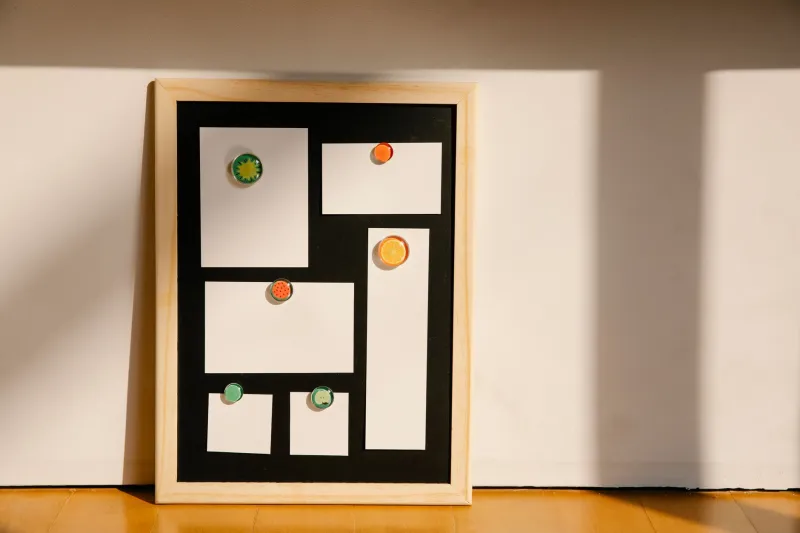
There is a particular kind of UK noticeboard that lives just inside a village hall door: cork the colour of weak tea, a fringed border of old staples, and a layer of paper that has been pinned, overlapped and half-torn away over the years. It is not glamorous. It is often behind a glass door that sticks. But it is also one of the most honest portraits of a place you will ever find.
On one side: a coffee morning in aid of the church roof. In the middle: a choir looking for altos, a repair café asking for broken lamps and patient volunteers, a toddler group with a faded cartoon duck. Lower down: a tear-off tab for a yoga class, a parish council notice, a poster for a Christmas fair that is already promising mince pies. Nothing here demands much of you. That is precisely the point.
A Map of Gentle Possibilities
Most of us are used to being sold community. We are told to join things, sign up, commit, put ourselves out there. For many people — especially those of us who are quietly wired — that can feel less like an invitation and more like a test. Will I know anyone? Will I have to talk? Will I be expected to come every week for the rest of my natural life?
The noticeboard asks a softer question. It simply says: this is happening. Someone thought it was worth pinning up. You are allowed to notice.
That may sound small, but noticing is the first act of belonging. Before we can feel part of a place, we have to see it. We have to register that other people are arranging chairs, boiling kettles, rehearsing harmonies, mending toasters and hoping someone might turn up. A noticeboard is a low-stakes way to let local life become visible again.
The Wisdom of the Tear-Off Tab
There is a lovely democracy to the tear-off tab. It does not require you to knock on a door or make a phone call. You can simply take a number, fold it into your pocket and decide later. You might never ring it. That is allowed. The tab has still done its work by reminding you that a door exists.
In a season when many of us are trying to be kinder to ourselves — and perhaps a little less isolated — this matters. Loneliness rarely announces itself with a dramatic flourish. More often it is a quiet absence: no reason to leave the house on a Tuesday evening, no one to text about the weird noise in the boiler, no shared joke about the vicar's raffle. The noticeboard cannot fix all that. But it can offer a handful of small, unpressured next steps.
You might spot a repair café and remember the lamp in the cupboard. You might see a coffee morning and think, I could manage twenty minutes of that. You might read a choir notice and feel a flicker of something — not necessarily commitment, just curiosity. Curiosity is enough to begin with.
Showing Up Without Performing
Belonging is often imagined as a personality trait. Either you are a joiner or you are not. But in practice, belonging is more like a habit of small returns. You go once. You nod at the person with the teapot. You go again a few weeks later. You learn one name. You discover that the woman by the cake stand also hates small talk. Slowly, a place becomes familiar.
The noticeboard makes this easier because it does not ask you to be impressive. It asks you to be present. You can arrive at a village hall with no anecdote prepared and no intention of becoming the life and soul. You can sit near the back. You can leave early. You can bring a book if it turns out to be too much. The invitation is not a contract.
And for those who find social contact genuinely draining, that distinction is everything. A low-pressure community is not a lesser community. It is simply one that leaves room for different temperaments. A noticeboard, with its wonky pins and polite requests, is a decent model for that kind of room.
A Small Practice for November
As the evenings close in, try this. Next time you pass a village hall, library, church porch or community centre, stop for a minute. Read the board properly. Not to judge it, not to decide whether it is 'for you', but just to see what is happening in your patch.
Notice what catches your eye. Maybe it is the seasonal fair. Maybe it is the bereavement café, the gardening club, the Scottish country dancing, the jumble sale. You do not have to act on it. You can simply let the information land. If something keeps tugging at you, take a photo of the poster or tear off a tab. Put it on the fridge. Let it be a possibility rather than a pressure.
Then, if you feel able, choose one small thing. Not the biggest commitment. Not the most sociable option. The gentlest one that still feels like a step towards the world. A coffee morning for twenty minutes. A repair café with a broken kettle. A choir rehearsal where you plan to listen more than sing.
The Quiet Invitation
We tend to think of belonging as something we must earn through extroversion, usefulness or years of attendance. The village hall noticeboard suggests otherwise. It offers a humbler route: notice what is there, take a tab, turn up once, see how it feels.
That is not a dramatic cure for loneliness, and it is not meant to be. It is a small, practical act of hope. A pin in a corkboard. A handwritten notice. A room with the chairs out. And somewhere in the middle of it all, the quiet possibility that there is a place for you here — not because you performed belonging perfectly, but because you were willing to notice the invitation.