A Shelf of Second Chances: The Quiet Etiquette of the Community Fridge

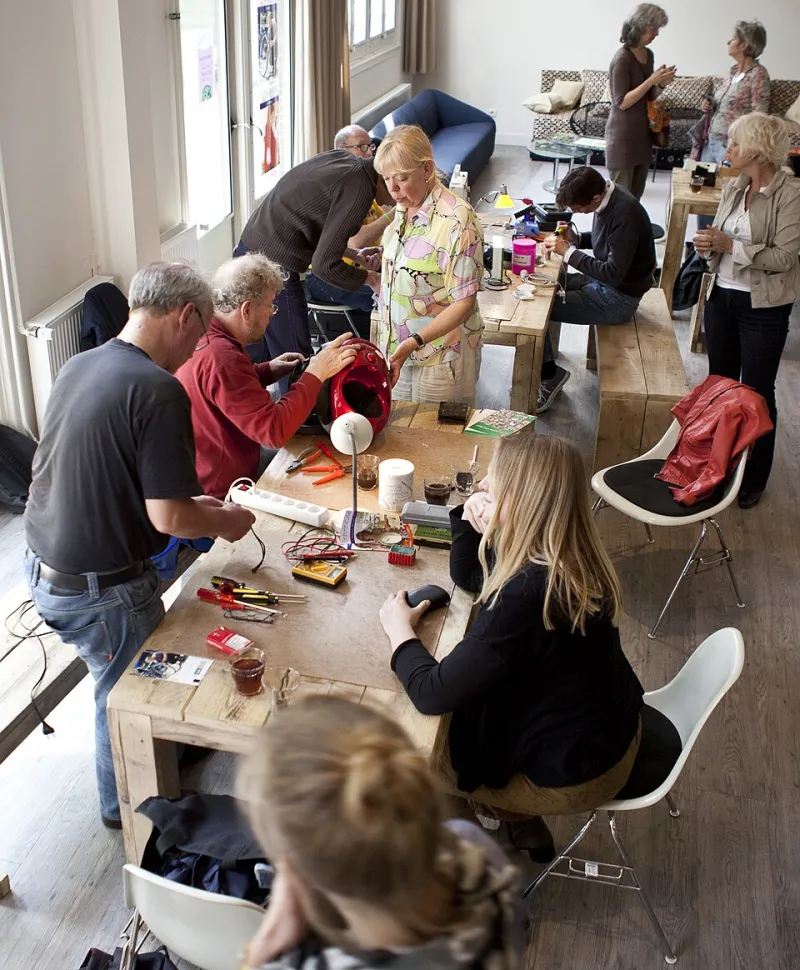
Photo: community fridge volunteers unpacking fresh food UK church hall, via www.buildbonding.com
The church hall smells of floor polish and oranges. Someone has propped the fire door open with a tin of chickpeas, and a hand-written sign taped to the noticeboard says, in careful capitals, TAKE WHAT YOU NEED. LEAVE WHAT YOU DON'T. Inside, two volunteers are unpacking crates of bread, peppers and yogurt onto a long table, and a woman in a raincoat is standing very still, pretending to read the leaflet about recycling.
I know that stillness. It is the posture of someone who has come for something and is not quite sure they are allowed.
Community fridges have become a quiet fixture of UK high streets and church halls over the past few years. The first one opened in Frome in 2016, and the idea has since spread through villages, housing estates and city centres, often supported by the Community Fridge Network run by the environmental charity Hubbub. The premise is simple: local businesses and households pass on surplus food, and anyone can come and take some. No referral. No means test. No form asking you to explain your circumstances in triplicate.
And yet the explaining happens anyway, doesn't it — mostly inside our own heads.
What a community fridge is, and what it isn't
It is not a food bank, though the two sometimes sit alongside each other and the distinction matters. A food bank typically works through vouchers and referrals. A community fridge is closer to a shared shelf: food that would otherwise be thrown away is made available to whoever can use it. The aim is to reduce waste and to build a bit of neighbourly connection while doing so.
That means the atmosphere varies enormously. Some fridges are bustling, with a queue out the door and a volunteer ticking names on a clipboard. Others are a table in a side room and a kettle. Some ask you to sign in — usually because funders want numbers, not because anyone is checking up on you. Some are open three mornings a week; others are open whenever the hall is.
It helps to check the opening times before you go. It helps even more to arrive without a speech prepared.
The awkwardness is normal
Most of us are well trained in giving. We know how to drop a bag at a collection point, sponsor a colleague's run, add a tin to the trolley. Receiving is a different muscle, and it can feel surprisingly sore.
There is a particular British discomfort in taking something for free. We worry about being seen. We worry that someone more deserving is waiting behind us. We worry that the volunteer will look at our decent coat and wonder what we are doing there. We rehearse explanations: it's mainly for my mum, really; I'm just topping up; I only came for the bread.
None of this is necessary. Need is not a character flaw, and it is not a competition. The fridge exists precisely because food is wasted and people are hungry, and those two facts sit alongside each other in the same street. Taking a loaf does not remove it from someone else's mouth; it keeps it out of a bin.
That said, a little etiquette goes a long way — not because anyone is policing you, but because shared things work better when we hold them lightly.
A simple etiquette for going
Before you go
Bring a bag. A sturdy one, ideally, and perhaps a couple of containers if the fridge allows them. Check the opening hours on the door, the website or the local Facebook page. If you have food to offer, check first what is accepted: most fridges can take unopened, in-date items, fresh produce and bakery surplus, but many cannot take home-cooked food, opened packets or anything past its use-by date.
At the fridge
Sign in if asked. It is a funding thing, not a judgement thing. Read the notices on the wall — they usually tell you how much to take and whether anything is reserved. Be patient with the volunteers, who are often doing this in their lunch hour, and be patient with the person beside you, who may be having a harder morning than you are.
What to take
Take what you will actually use. A reasonable amount for your household is the right amount — enough for a few meals, not the whole tray of yogurts because they are there. Take the odd-looking courgette. Take the bread that is going stale tomorrow and put it in the freezer tonight. If you are cooking for a neighbour or a family member, that counts too; you do not need to pretend it is only for you.
What not to do is take food in order to redistribute it elsewhere. It sounds generous, but it breaks the model: the fridge is the distribution point, and it works because people take what they need and leave the rest for the next person through the door.
How to leave
Say thank you if you feel like it. Do not say sorry. You do not owe anyone an account of your finances, your benefits, your job or your week. A simple thanks, that's a help is plenty, and it is kinder to the volunteer than a long apology they have to wave away.
If you can, come back another time with something to give — a few tins, a bag of apples, an hour of your Tuesday. Not as repayment, and not as a transaction. Just as part of the same loop.
A small practice in trusting the neighbourhood
What I like about the community fridge is not only the food. It is the quiet reordering of things that happens when you walk in. For a few minutes, the high street is not just shops and bus stops; it is a place where somebody has thought about you in advance. A stranger has left a crate of peppers on a table in case they are useful. Another stranger has opened the door.
That is a small, ordinary kind of trust. It is not naive, and it is not sentimental — the fridge still has rules, rotas and a laminated sign about use-by dates. But underneath all that is a very old idea: that a neighbourhood is a set of shared arrangements, and that we are allowed to lean on them.
So if you have been walking past the hall on your way to somewhere else, wondering whether the sign applies to you: it probably does. Take the bread. Freeze the bread. Say thank you and go home. The shelf will be there next week, and so, most likely, will you.