A Seat in the Open: The Quiet Permission of a Town-Centre Bench
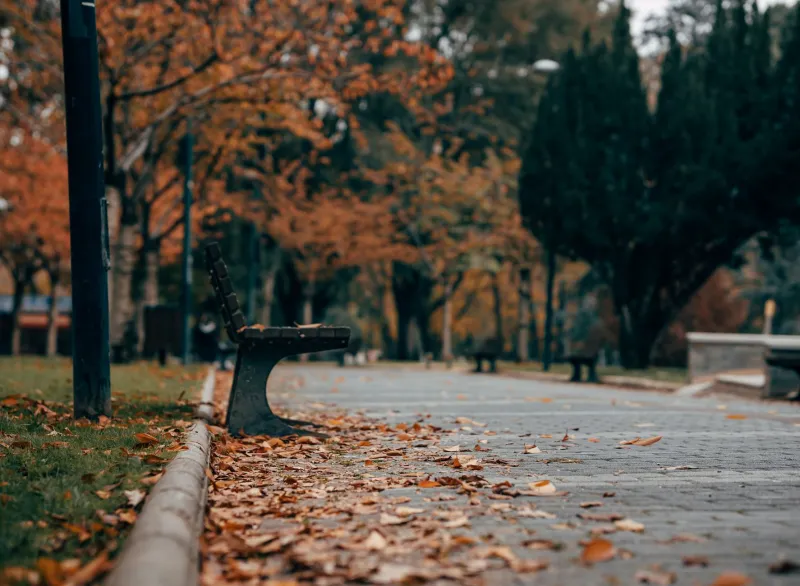
Somewhere between the pharmacy queue and the bus stop, there is usually a bench. It may be damp. It may face a bin. It may be the kind of municipal seat that looks as if it was designed by a committee with a grudge against comfort. And yet, on a grey November afternoon, it can be one of the most useful wellbeing tools in town.
You do not need a forest, a retreat or a matching yoga outfit to take a pause. You need a place to sit, a few unhurried minutes and a willingness to stop treating rest as a reward you have to earn. The public bench offers all three, usually for free.
Rest without making it a project
There is a particular trap in modern wellbeing: we turn rest into another task. We track it, optimise it, buy something for it and then feel mildly guilty when we fail to enjoy it properly. A bench is a useful antidote to all that. It is not a programme. It is a slab of wood or metal with a view of the pavement.
Sitting there does not require a streak, an app or a before-and-after photo. You simply arrive, sit down and let the world carry on around you for a bit. That is the whole idea. If you leave after four minutes because your feet are cold, nothing has gone wrong.
The etiquette of sitting in plain sight
Resting in public can feel oddly exposed at first. We are used to being in public with a purpose: shopping, commuting, meeting someone, heading somewhere. Sitting without a visible reason can feel like loitering, even when it is perfectly ordinary.
A few small courtesies make it easier. Leave space at the end of a bench if someone else might need it. Keep your bag close rather than spread out like a picnic. A brief nod is enough if you catch someone's eye. You do not have to perform cheerfulness or explain yourself. Looking vaguely at the middle distance is a long-established British social skill.
Churchyard benches, park edges and high-street seats all have their own atmosphere. A churchyard tends to be quieter, though it is worth being respectful if a service or burial is taking place. A park bench gives you trees and dogs and the sound of children being told not to fall in the pond. A town-centre bench gives you the raw material of ordinary life: deliveries, prams, wet coats, someone eating chips. None of these is more spiritual than the others. They are simply different flavours of being alive.
A small field guide for five unhurried minutes
Choose a bench that feels safe and reasonably dry. Sit down properly rather than perching as if you are about to be called away. Let your feet rest on the ground. Unclench your jaw. Notice the weight of your body being held by the seat.
Then try three simple things. First, look for one detail you would not have noticed if you had kept walking: a chipped tile, a window box, the way the light is sitting on wet paving. Second, listen for one sound that is not your own thoughts: a bus door, a sparrow, a distant kettle of conversation. Third, take one slower breath than usual. Not a dramatic sigh. Just a breath that has a little more room in it.
That is enough. You are not trying to reach a state. You are giving your nervous system a small, unremarkable signal that it is safe to stop scanning for the next thing for a moment.
Noticing what the season is doing
A bench is a good place to watch the year turn. In November, the low sun can make ordinary brickwork look briefly golden. The pavements smell of wet leaves and diesel. Someone is wearing a coat that is not quite warm enough yet. The Christmas lights are going up, perhaps a little too early, and the town is pretending not to be excited.
This kind of noticing is not about forcing gratitude. It is about letting the world be more detailed than your to-do list. When you sit still, the season becomes less of a backdrop and more of a thing you are actually in. That can be quietly steadying.
The quiet company of other people
Loneliness is not always solved by company, and sitting on a bench is not a replacement for friendship or support. But there is a particular kind of relief in being near other people without having to talk to them. You can be alone in public and still feel part of the human weather.
A bench gives you that. You hear fragments of conversation. Someone asks if the number 42 has been yet. A child drops a glove. A man in a fleece eats a sandwich with great seriousness. None of it demands anything from you. You are simply among it.
A small civic kindness
We tend to think of benches as street furniture, barely worth noticing until they are gone. But a bench is a small civic kindness: a place for the older person who needs to rest halfway home, the worker eating lunch, the teenager waiting for a friend, the person who needs to sit down before they cry. It is infrastructure for being human.
So the next time you pass an empty bench, consider it an invitation rather than a prop. You do not have to make it meaningful. You do not have to stay long. Sit in plain sight for a few minutes and let the high street go on without you. That small pause is not a luxury. It is one of the quietest, cheapest forms of care we have.