Milk, Matches, and a Nod: The Evening Shop Run as a Small Anchor
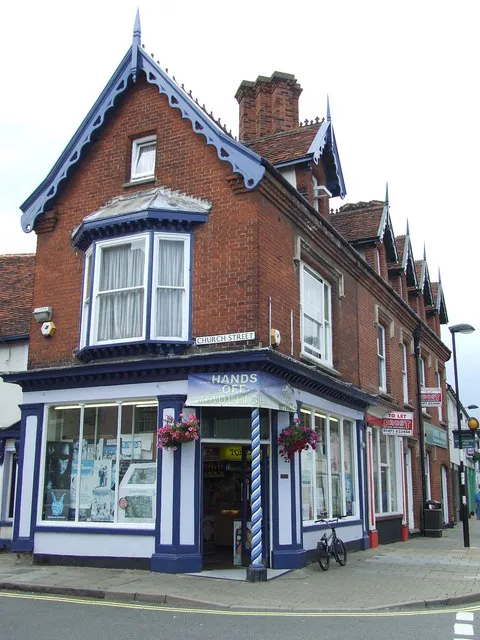
Photo: Keith Evans, CC BY-SA 2.0, via Wikimedia Commons
It is just after five on a wet November evening, and the sky has already given up. The bus is full of people staring at their phones, the pavements are slick, and the corner shop is doing that thing it does: glowing. Not dramatically. Just a warm rectangle of light between the charity shop and the takeaway, with a hand-written sign in the window about umbrellas and a small stack of newspaper outside.
You go in for milk. You come out with milk, maybe a lemon, and something less easy to name. A nod. A bit of warmth. A sense that the day has a door you can close behind you.
This is not a grand spiritual practice. It is a shop. But small, repeated rituals are often where wellbeing actually lives — not in the retreat you book once a year, but in the ordinary places you pass on the way home.
Why the corner shop works
A supermarket is designed to move you through. The self-checkout beeps, the lights are bright, and the whole thing feels like a transaction with a building. A corner shop is smaller than that. It has a counter. It has a person behind it. It has a rhythm you can learn.
That rhythm is the point. The shopkeeper knows where the carrier bags are, which regular buys the same paper, and how long the queue gets when the school run overlaps with the commute. Watching that rhythm for a minute — really watching, rather than scrolling — is a quiet way of re-entering the human world after a day of screens and tasks.
There is also the low-stakes nature of it. Nobody is asking you to be interesting. You do not have to perform. You can buy a pint of milk and say 'evening' and that is enough. For readers who feel lonely, especially in the darker months, that small thread of recognition can matter more than it sounds.
The practice: one item, one look, one line
Start with one thing you actually need. Milk. Bread. Matches. A lemon for tomorrow's tea. The item is not important; it simply gives you a reason to be there. Try not to turn it into a full weekly shop. The smaller the basket, the more room there is to notice what is around you.
At the door, pause for half a second. Hear the bell, if there is one. Feel the change in temperature. Notice the smell — newsprint, floor cleaner, sometimes a faint waft from the fridge. This is the threshold. You are arriving.
Then watch the counter for a moment. Not in a staring way. Just enough to see how the shopkeeper moves: the way they slide the card machine round, the quick glance at the queue, the small comment to the person before you. Let them be a person, not a service point.
When it is your turn, offer one line. 'Evening.' 'Cold one tonight.' 'Just this, thanks.' That is plenty. If they reply, listen. If they do not, that is fine too. Pay, take your change or tap your card, and say 'thanks — see you' as you leave. The 'see you' is the quiet part that matters. It assumes a next time.
If you feel awkward
Awkwardness is normal. You are not doing a personality test. You are doing a small, repeatable act of presence. Here are a few ways to make it easier.
- If you are rushed: give yourself ninety seconds and no more. Buy the one item, make eye contact once, say thanks. That still counts.
- If you do not know what to say: use the weather. It is the UK's oldest social lubricant. 'Dark early now, isn't it?' is a complete sentence and a kind offering.
- If the shop is busy: do not force conversation. A nod and a 'thanks' is a full exchange. The practice is not about length; it is about attention.
- If you feel self-conscious: choose the same time and day each week. Familiarity does the work for you. After a few visits, the nod becomes a small recognition, and recognition is the whole point.
The dusk transition
The end of the working day is a gap. You are no longer in work mode, but you are not quite home yet either. On dark evenings, that gap can feel like a lurch — from the office or the laptop to an empty kitchen, from the bus to the front door. The corner shop can sit inside that gap as a gentle marker.
You do not need to make it meaningful. In fact, it is better if you do not try too hard. Just let the visit be a pause. The lit window, the bell, the brief exchange, the walk back out into the cold. By the time you put the key in your own door, the day has already begun to loosen its grip.
There is a line of thinking that says we are known by our routines. Not in a grand, identity-defining way, but in the small, everyday sense. The barista who remembers your order. The bus driver who nods. The shopkeeper who says 'same as usual?' These are weak ties, and they hold a surprising amount of weight. They are not a substitute for close friendship. They are something else: a texture of belonging.
A small note on loneliness
If you are lonely, a corner shop will not fix it. It would be dishonest to pretend otherwise. But it can be a low-pressure thread back into the world. On a dark November evening, the person who sells you milk may be the first person to ask how your day was — or simply to say 'ta, love' as they hand you your change.
That is not nothing. Small contacts accumulate. They remind you that you are part of a street, a neighbourhood, a ordinary human web. And they ask very little of you in return.
Three gentle prompts for this week
- Choose your shop. It does not have to be the closest one. It just has to be one you can pass regularly without going out of your way.
- Pick one item. Keep it boring and useful. The ritual is in the repetition, not the purchase.
- Say one line. 'Evening.' 'Thanks.' 'See you.' Any of these will do. Notice what happens next — not as a test, but as a small piece of information about your local world.
On the way home, try not to reach for your phone immediately. Let the shop run finish. The cold air, the carrier bag, the sound of your own feet. By the time you are home, the day will have a slightly softer edge.
The shop is not a temple. It is a shop. But the bell over the door, the nod at the counter, and the short walk back in the dark can become a quiet anchor — one that asks only that you show up, buy your milk, and let yourself be briefly known.